Did you know that over 60% of Americans are now participating in the gig economy, with many earning upwards of $1,000 a month from side hustles alone? In 2026, the landscape for making extra money has never been more dynamic — offering unprecedented opportunities for those willing to look beyond traditional employment. Whether you’re a seasoned freelancer or just starting out, understanding the nuances of this evolving market is the key to consistently growing your income. This article draws on real-world gig economy opportunities, practical strategies for leveraging technology to generate passive income, and the latest trends in stocks and cryptocurrency investing. We also introduce GenLogin — a powerful browser automation platform trusted by thousands of marketers and data researchers to streamline data collection and scale digital workflows efficiently. If you’re serious about financial independence or simply want to diversify your income, these insights will give you the actionable knowledge to get started.
In 2026, the gig economy continues to thrive as one of the most accessible paths to supplemental income. According to recent data, nearly 36% of the U.S. workforce now participates in some form of gig work — a figure that has steadily grown over the past decade. The gig economy encompasses short-term, flexible jobs facilitated by digital platforms, allowing people to monetize their skills and time on their own terms. Household names like Uber, Fiverr, and Upwork have become go-to platforms for gig workers at every level — from first-time freelancers to seasoned professionals running six-figure independent businesses.
Emerging gig opportunities are increasingly found in tech and creative fields. The demand for app developers, UX/UI designers, and digital marketing specialists has surged, with businesses regularly turning to freelance talent for short-term projects. As technology evolves, niche platforms are also gaining traction — including those focused on virtual reality content, AI-driven customer service, and no-code automation. This diversification means gig workers today have more income options than ever, regardless of their background or expertise.
To illustrate: a graphic designer who joins Fiverr and consistently delivers quality logo packages at $200 per project needs just five completed orders a month to generate an additional $1,000 in income. That’s a realistic, achievable target for anyone with a marketable creative skill and a few hours per week to spare.
To maximize the benefits of the gig economy, start by identifying your strongest skills and matching them to platforms built around those capabilities. Building a compelling profile, gathering early reviews, and delivering consistently high-quality work will compound your reputation — and your earnings — over time.

Driving and delivery services remain among the most popular entry points into the gig economy, particularly for those who value schedule flexibility. Platforms like Uber and Lyft have fundamentally reshaped the ride-sharing industry, enabling drivers to earn on their own schedule. Depending on location and peak hours, Uber drivers typically earn between $15 and $20 per hour — enough to make a meaningful dent in monthly expenses or savings goals.
Delivery gigs have seen equally strong growth, driven by the continued consumer shift toward at-home delivery. Platforms like DoorDash and Instacart allow workers to earn between $10 and $25 per hour, with tips and surge pricing pushing earnings higher during peak windows like lunch, dinner, or weekends.
A practical strategy many gig workers use: driving for Lyft on weekends (higher passenger demand) while handling DoorDash deliveries on weekday evenings (dinner rush). This combination creates a reliable, diversified income stream while leaving daytime hours free for other work or personal commitments. The key to succeeding in these roles is timing — prioritizing high-demand windows and maintaining a strong customer rating to qualify for bonuses and preferred dispatch.
Creative freelancing offers enormous income potential for those with skills in design, copywriting, video editing, or digital content production. Marketplaces like Fiverr, Upwork, and Freelancer connect skilled professionals directly with clients — removing gatekeepers and allowing freelancers to set their own rates and work on projects they find meaningful.
Building a strong portfolio is the single most important step for attracting high-quality clients. Prospective clients want evidence of range and reliability — a writer should demonstrate versatility across topics and formats, while a graphic designer should showcase different styles, use cases, and brand identities. The more specific and results-oriented your portfolio, the more confidently clients can hire you.
The highest-demand freelance skills in 2026 include web development, SEO strategy, video editing, and AI prompt engineering. As businesses increasingly prioritize their digital presence and content output, experienced freelancers in these niches regularly command $50–$150+ per hour on major platforms. A web developer securing just a few mid-size projects per month on Upwork — each averaging $1,500 — can earn well over $4,000 in supplemental income without committing to a full-time role.
To thrive long-term as a creative freelancer, treat every project as a relationship, not a transaction. Repeat clients and referrals are the most efficient growth channel in freelancing — they require zero marketing spend and often lead to higher-paying engagements over time.
In 2026, technology has become the most scalable foundation for passive income — enabling individuals to earn money around the clock with minimal ongoing effort. A well-built blog remains one of the most durable passive income vehicles available. By selecting a niche with strong organic search demand, optimizing content for SEO, and publishing consistently useful articles, bloggers can generate steady revenue through display ads and affiliate commissions. Platforms like WordPress make setup accessible even for non-technical users. Monetization typically becomes meaningful once a blog surpasses 10,000 monthly visitors — at which point ad networks and affiliate programs begin generating real, recurring revenue.
Affiliate marketing amplifies this model by allowing content creators to earn commissions on products they genuinely recommend. The most successful affiliate marketers don’t just promote anything — they build authority in a specific niche, earn audience trust, and recommend products they’ve personally evaluated. Research tools like Google Trends and Ahrefs are essential for identifying high-demand, low-competition niches where content can rank and convert effectively.
Online courses represent another powerful passive income channel. Once created and published on platforms like Udemy or Teachable, a single course can generate revenue for years with periodic updates. A well-structured course in a high-demand skill area can realistically earn hundreds to thousands of dollars per month — especially when paired with an email list and social media presence that drives ongoing enrollment.
The most effective approach is to start with content — build a blog or YouTube channel that establishes your credibility — then layer in affiliate links and course offerings as your audience grows. Each layer compounds the others, creating a passive income ecosystem that strengthens over time.

Niche selection is arguably the most important decision in affiliate marketing — it shapes your audience, your content strategy, and ultimately your revenue ceiling. The ideal niche is specific enough to reduce direct competition but broad enough to sustain a consistent content pipeline and attract a meaningful volume of buyers. Rather than targeting the broad “health and wellness” space, for example, a more effective approach might be to focus on “recovery supplements for endurance athletes” — a narrower audience with high purchase intent and fewer competing voices.
Data-driven research is essential before committing to a niche. Tools like SEMrush and Google Keyword Planner reveal search volume, keyword difficulty, and seasonal demand patterns — giving you an evidence-based picture of which niches are worth entering. Competitor analysis adds another layer: by studying what the top-ranking sites in a niche are doing well (and where they fall short), you can identify content gaps and opportunities to differentiate.
Audience targeting is equally critical. Creating detailed buyer personas helps you craft content that speaks directly to the needs, objections, and aspirations of your ideal reader. Tutorials, product comparisons, and honest reviews tend to outperform generic promotional content because they provide genuine value before asking for a click. Email list building and strategic social media engagement further deepen audience relationships — turning one-time visitors into loyal followers who trust your recommendations.
The bottom line: affiliate marketing rewards patience and precision. Choose your niche carefully, build your authority consistently, and let the data guide your content decisions.
Creating a successful online course starts with one question: what do you know that others are actively trying to learn? The most profitable courses solve a specific, well-defined problem — not broad topics like “marketing,” but focused outcomes like “how to run profitable Facebook ads for local service businesses.” Once you’ve identified your topic, conduct a competitor audit on platforms like Udemy to understand what already exists and how your course can offer something meaningfully better or different.
Course structure matters enormously. Break content into logical modules and short lessons — learners engage far better with focused 5–10 minute segments than long, dense recordings. Supplement video lessons with downloadable resources, quizzes, and real-world exercises to reinforce learning and justify premium pricing.
Platform selection shapes your revenue model. Udemy offers built-in marketplace traffic but takes a significant revenue share and limits your pricing flexibility. Teachable gives you full control over branding and pricing but requires you to drive your own traffic. For creators with an established audience, Teachable’s model typically yields higher earnings per student. Both platforms provide analytics to help you track completion rates, engagement, and revenue over time.
Marketing is where many course creators fall short. Building an email list before launch, offering free mini-lessons or webinars to generate interest, and gathering early testimonials from beta students all significantly improve launch results. Pricing should reflect the transformation your course delivers — not just the hours of content. A $297 course that helps someone land their first freelance client is priced conservatively; a $97 course without clear outcomes may still feel overpriced to buyers.
Investing in stocks and cryptocurrencies has become an increasingly mainstream strategy for building long-term wealth and supplementing active income. In 2025, the global stock market delivered an average annual return of approximately 7%, while cryptocurrencies like Bitcoin experienced their characteristic volatility — with returns ranging from -20% to +120% within a single year. These figures illustrate both the opportunity and the risk inherent in each asset class, and why a thoughtful, diversified approach is essential for any serious investor.
Stocks are generally considered the more stable option. They’re backed by real businesses, governed by established regulatory frameworks, and have a long track record of rewarding patient, diversified investors through dividends and capital appreciation. Cryptocurrencies, by contrast, operate in a decentralized, lightly regulated environment where prices are driven by market sentiment, technology developments, and macro narratives. The underlying blockchain technology offers genuine innovation — but the market’s immaturity means price swings that would be extraordinary in stocks are routine in crypto.
| Investment Type | Average Annual Return (2025) | Volatility | Regulatory Framework | Risk Level |
|---|---|---|---|---|
| Stocks | 7% | Moderate | High | Medium |
| Cryptocurrencies | -20% to +120% | High | Low | High |
As the table illustrates, stocks and cryptocurrencies serve different roles in a portfolio. Stocks provide steady, moderate growth with well-understood risk parameters; crypto offers the possibility of outsized gains but demands a higher tolerance for volatility and loss. Investors who treated crypto as a speculative allocation — keeping it to 10–20% of their overall portfolio — consistently reported better risk-adjusted outcomes than those who concentrated heavily in either direction.
The practical takeaway: diversification isn’t just a hedge — it’s a strategy. Allocate the majority of your investment capital to stable, income-generating assets like index funds and dividend stocks, and treat cryptocurrency as a high-risk, high-reward satellite position sized according to your risk tolerance and time horizon.
Getting started in the stock market is more accessible than most beginners realize. Opening a brokerage account on platforms like Fidelity, Charles Schwab, or Robinhood typically requires a minimum deposit of just $100–$500. Most platforms include educational resources, market analysis tools, and portfolio tracking dashboards designed specifically to support new investors.
Fundamental analysis is the foundation of intelligent stock selection. This involves evaluating a company’s financial health — reviewing revenue trends, profit margins, debt levels, and long-term growth potential — before committing capital. The goal is to identify businesses trading below their intrinsic value, with strong fundamentals and a clear path to continued growth. Pair this with sector diversification: spreading investments across technology, healthcare, consumer goods, and energy reduces your exposure to any single industry’s downturns.
A beginner who invested $1,000 in 2025 across five different sectors — rather than concentrating in a single hot stock — achieved a 10% return by year-end, outperforming the market average. This result reinforces a core principle of investing: diversification reduces risk without proportionally reducing returns. Start small, invest consistently, and let compounding do the heavy lifting over time.
As of 2026, Bitcoin and Ethereum remain the dominant digital assets by market capitalization, and blockchain technology continues to attract serious institutional interest. For individual investors, the appeal of crypto lies in its asymmetric upside — but that upside comes with equally asymmetric downside risk that demands careful management.
Bitcoin’s price history alone tells the story: in 2025, it doubled within six months before retracing nearly 50% of those gains. Regulatory announcements, exchange outflows, macroeconomic shifts, and even social media narratives can move crypto prices significantly within hours. This is not a market for passive, set-and-forget investing — it requires active monitoring and disciplined risk management.
Best practices for crypto investors include: using hardware wallets (such as Ledger) to store assets securely offline, enabling two-factor authentication on all exchange accounts, setting stop-loss orders to limit downside exposure, and never investing more than you can afford to lose entirely. A case study from 2025 is instructive: an investor who distributed holdings across Bitcoin, Ethereum, and two smaller-cap altcoins — while keeping the majority in cold storage — achieved a 30% portfolio gain despite significant market volatility, precisely because their risk management held firm during drawdowns.
Stay informed through reputable sources, engage with trustworthy communities, and approach every position with a clear entry, exit, and risk plan. Crypto rewards the prepared and punishes the impulsive.
As data-driven decision-making becomes the standard across industries, GenLogin has established itself as a practical, reliable solution for individuals and teams who need to collect, monitor, and act on web data at scale. Global market research spending reached $76 billion in 2025 — a figure that reflects just how central data has become to competitive strategy, product development, and income generation. GenLogin positions itself squarely at the intersection of this demand, offering a browser automation platform purpose-built for efficient, sustainable data scraping.
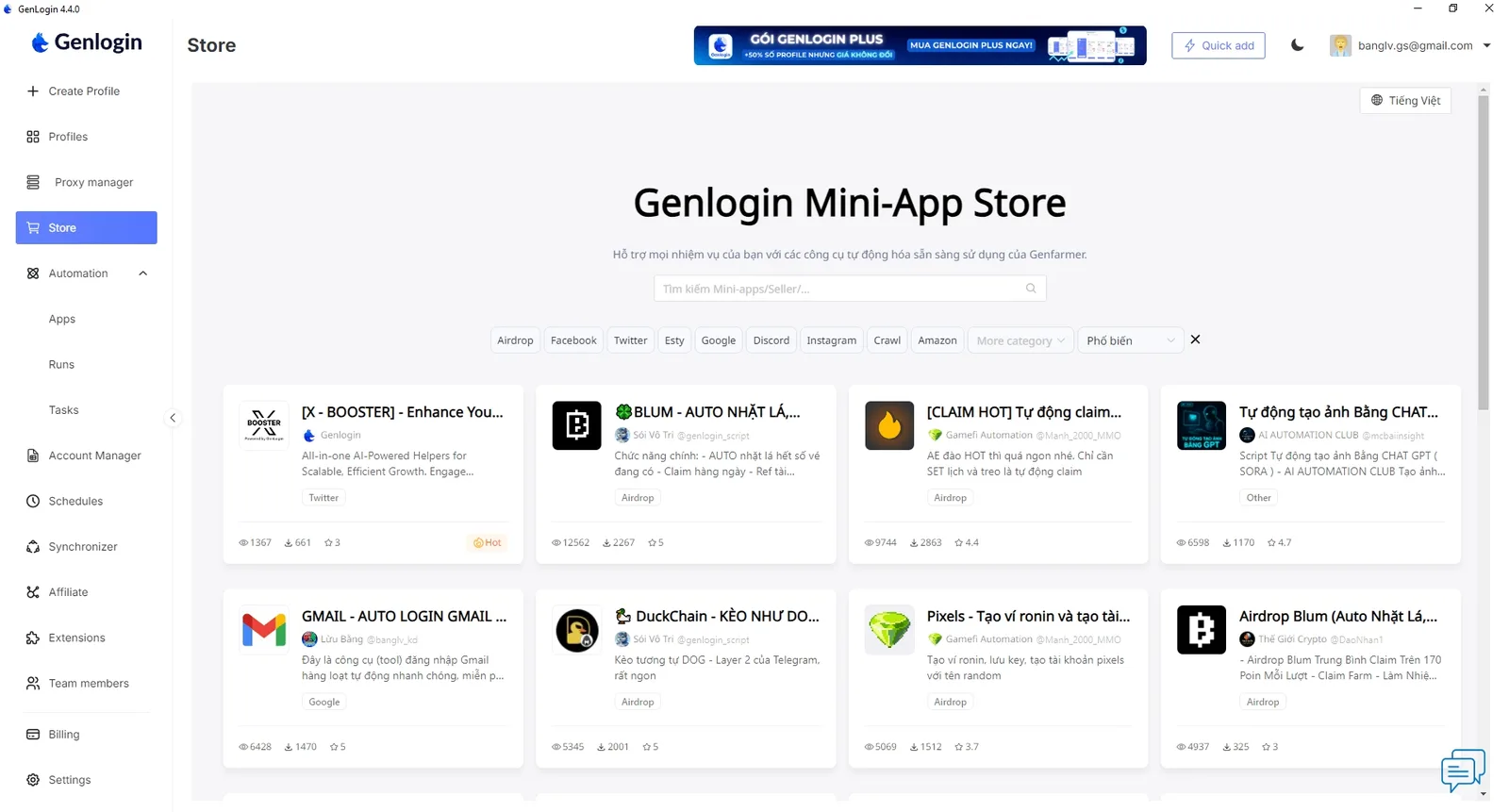
What sets GenLogin apart is its combination of profile management, proxy integration, and a pre-built script library accessible through the GenLogin Marketplace. Each profile can be independently configured with distinct browser fingerprints and proxies — meaning you can run simultaneous data collection tasks across multiple platforms without triggering security flags. Scripts for high-traffic e-commerce platforms like eBay, Amazon, and Taobao are available on the marketplace, and users report data collection speeds up to 70% faster compared to manual methods.
A practical example: a freelance market researcher tracking product pricing trends across eBay categories can use GenLogin to automate the entire data pipeline — from initial crawl to structured output — running multiple profiles simultaneously with rotating proxies to ensure uninterrupted access. What would take days of manual work is reduced to hours of automated execution, with the researcher’s time freed up for the higher-value work of analysis and strategy.
For anyone building income through data collection, competitive research, or digital market analysis, integrating GenLogin into your workflow delivers a compounding productivity advantage — you spend less time gathering data and more time acting on it.
Getting the most out of GenLogin starts with deliberate profile configuration. Each profile should be set up to authentically simulate a real user session for its target platform — this means configuring browser fingerprint parameters (canvas, WebGL, timezone, language, and screen resolution) to match the expected profile of an organic visitor. For platforms like Amazon, even subtle mismatches in fingerprint data can trigger bot detection; accuracy here directly affects the reliability of your data collection.
Proxy selection and rotation are equally important. Proxies act as intermediaries between your machine and the target site, masking your real IP and distributing request volume across multiple addresses. Rotating proxies — which automatically cycle through a pool of IPs — are particularly effective for high-frequency scraping tasks on platforms that monitor access patterns closely. Source your proxies from reputable providers, and always verify quality before deploying them on high-value accounts. Tools like Pixelscan, Whoer, and IPFighter can help you audit proxy quality before use.
Script selection should be driven by your specific data requirements. The GenLogin Marketplace offers a wide catalog of scripts organized by platform and use case — from product listing scrapers to review aggregators to price monitoring tools. Select scripts that target exactly the data points you need; over-broad scripts collect unnecessary data and slow down execution. Before scaling any new setup, run a small-batch test to validate proxy performance, script accuracy, and profile stability. Catching configuration issues early saves significant time and protects against account-level blocks on target platforms.
As your confidence grows, gradually increase task volume and complexity. GenLogin’s multi-profile, multi-thread architecture means that scaling up is largely a matter of adding profiles and proxies — the underlying automation engine handles the rest. This makes it one of the most efficient platforms available for anyone building a data-driven side income or market research workflow.
In 2026, the path to building meaningful supplemental income has never been more accessible — or more varied. Nearly 36% of the workforce is actively participating in gig roles, proving that flexible, skills-based income is no longer a niche pursuit but a mainstream financial strategy. Technology continues to unlock passive income at scale, with blogs, affiliate programs, and online courses turning expertise and consistency into compounding revenue streams. Meanwhile, disciplined investing in stocks and cryptocurrencies offers the potential for long-term wealth building — provided risk is managed thoughtfully and decisions are grounded in data rather than speculation.
But opportunities alone are not enough. Acting on them effectively requires the right tools — and that’s where GenLogin delivers real, measurable value. As a browser automation platform built for data collection, multi-account management, and workflow automation, GenLogin gives individuals and teams the infrastructure to operate efficiently at scale — whether you’re tracking product trends on Amazon, running social media automation, or conducting competitive research across e-commerce platforms.
Ready to put data to work for your income strategy? Visit the GenLogin Marketplace to explore a growing library of ready-to-deploy automation scripts tailored for the platforms that matter most to your workflow. The tools are there — the next step is yours to take.