Navigating the crowded landscape of social media marketing tools requires more than reading feature lists — it requires understanding how a tool performs under real operational conditions and whether it genuinely addresses the problems marketers face at scale. OpenClaw has attracted attention for delivering measurable engagement improvements, with early adopters in structured campaigns reporting lifts of 30% or more in interaction rates. For digital marketers managing multiple platforms simultaneously, this kind of efficiency gain is significant. What makes OpenClaw particularly relevant in 2026 is its integration architecture with GenLogin — a browser automation platform that handles the profile isolation, proxy management, and fingerprint consistency that serious multi-account social media operations require. This article breaks down how OpenClaw actually works, what the GenLogin integration enables in practice, how OpenClaw compares against established alternatives like Hootsuite and Buffer, and what type of marketer is most likely to benefit from adopting it.
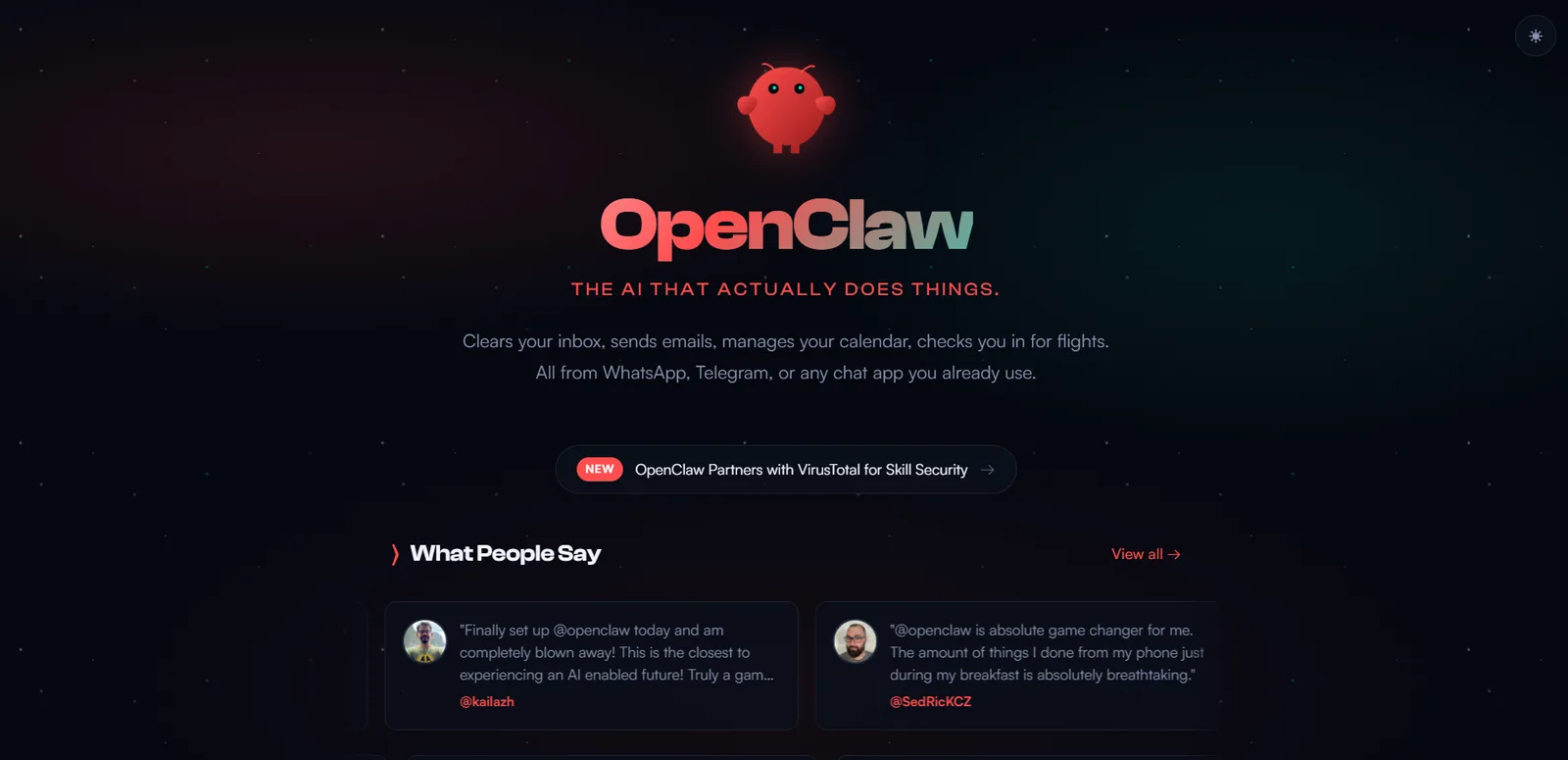
OpenClaw addresses a specific and well-documented problem in social media marketing: the operational overhead of managing consistent engagement across multiple platforms while maintaining the data visibility needed to make campaign decisions in real time. For businesses allocating $10,000 or more monthly to social media advertising, the inefficiency of fragmented tools and manual processes is a genuine cost driver — not just in labor hours, but in delayed decision-making and missed optimization windows.
The platform’s approach is to consolidate three capabilities that are typically distributed across separate tools: automated content distribution, unified cross-platform analytics, and audience behavior tracking that informs targeting adjustments. The automation layer handles scheduling and posting across connected platforms from a single interface. The analytics layer aggregates performance data into a dashboard that surfaces actionable insights without requiring manual data pulls from each platform’s native analytics. The audience behavior layer uses historical engagement data to predict optimal posting windows and content format performance — a capability that addresses one of the most common failure modes in social media marketing, which is applying static strategies to audiences whose behavior changes continuously.
A concrete example of what this looks like operationally: a mid-sized e-commerce brand used OpenClaw to automate its Instagram posting schedule and leverage the platform’s engagement timing recommendations. Rather than posting at standard industry-average times, the team followed OpenClaw’s audience-specific timing data. Within three months, engagement rates increased by 30% — not because the content changed dramatically, but because it was consistently reaching the audience during their highest-activity windows. The improvement came from data discipline applied systematically, which is exactly the kind of repeatable advantage that structured automation enables.
For marketers evaluating their toolkit, the relevant question isn’t whether OpenClaw has impressive features — it’s whether those features solve the specific problems creating friction in their current workflow. If the bottleneck is cross-platform scheduling overhead, OpenClaw’s automation layer addresses that directly. If the bottleneck is delayed or siloed analytics data, the unified dashboard resolves it. If the challenge is adapting strategy quickly as audience behavior shifts, the predictive analytics layer provides an edge that manually operated tools cannot match at scale.
The most instructive real-world application of OpenClaw comes from agency operations, where the combination of scale and client accountability creates particularly demanding requirements. A digital marketing agency managing an underperforming Facebook campaign for a retail client faced a choice between continuing with their existing manual approach or adopting OpenClaw’s automation and analytics framework. The manual approach had produced inconsistent results — posting schedules that didn’t align with peak audience activity, content adjustments that lagged behind engagement data by days rather than hours, and no systematic way to test content variations against each other at scale.
The agency implemented OpenClaw with a specific focus on three changes: automated posting schedules calibrated to the engagement timing data OpenClaw generated for that specific audience, systematic A/B testing of content formats using OpenClaw’s scheduling and tracking capabilities, and weekly sentiment analysis reviews to identify which content themes were generating positive versus neutral audience responses. The execution required an upfront configuration investment of approximately two weeks to set up profiles, connect accounts, and calibrate timing recommendations — but once operational, the system ran with minimal manual intervention.
The results over six weeks were measurable: user interactions doubled compared to the pre-OpenClaw baseline, with the improvement attributable primarily to the timing optimization and the faster feedback loop that real-time analytics enabled. Content adjustments that previously took a week to implement based on monthly reporting could now be made within 24 to 48 hours based on live engagement data. The agency’s feedback highlighted two factors as most significant: the quality of the timing recommendations, which were more granular and audience-specific than anything they had generated manually, and the reduction in reporting labor, which freed capacity for strategic work.
The practical takeaway is that OpenClaw’s value in agency contexts is largely a function of the speed at which it converts data into actionable decisions. The automation features reduce execution overhead; the analytics features reduce the time between observation and adjustment. Together, they compress the optimization cycle in ways that create compounding performance improvements over time.
OpenClaw is built on a cloud-based architecture that connects to social media platforms through their official APIs and, in more advanced configurations, through browser automation integrations. The cloud foundation means there’s no local installation dependency and that scaling — adding platforms, accounts, or users — doesn’t require infrastructure changes on the marketer’s end. This is a meaningful operational advantage for agencies and marketing teams that need to onboard new clients or expand into new platforms without significant IT involvement.
The core workflow is organized around three functional layers. The first is the scheduling and distribution layer, which allows users to plan content across multiple platforms from a unified calendar interface, set posting times manually or accept OpenClaw’s data-driven timing recommendations, and manage platform-specific content variations from a single workflow. The second is the analytics and reporting layer, which aggregates engagement metrics — reach, impressions, interaction rate, share velocity, conversion attribution — across all connected platforms and surfaces them in a real-time dashboard with trend indicators and anomaly flagging. The third is the integration layer, which connects OpenClaw to external tools including CRM platforms like HubSpot and Salesforce via API, and browser automation platforms like GenLogin for advanced multi-account management and data collection workflows.
The GenLogin integration specifically enables capabilities that go beyond what OpenClaw can accomplish through API connections alone. Social platforms impose rate limits, geographic restrictions, and activity pattern monitoring through their APIs. GenLogin’s browser profile architecture allows marketers to simulate authentic user sessions from distinct device environments, enabling A/B testing at scale, competitor content monitoring, and engagement simulation that complements OpenClaw’s scheduling and analytics capabilities. A digital marketing agency using the combined system can run concurrent campaigns across 50+ client accounts, with each account operating from an isolated browser profile with its own proxy assignment, reducing the cross-account detection risk that would otherwise limit multi-account operations.
Setup for OpenClaw’s core functionality requires no specialized technical background. API connections to major social platforms are configured through a guided setup flow. Integration with external CRM tools requires API key exchange, which most platforms document clearly. The GenLogin integration adds a configuration layer — setting up browser profiles, assigning proxies, developing automation scripts — that benefits from some technical familiarity, though GenLogin’s interface is designed to be accessible to users without software development backgrounds.
OpenClaw’s feature set is most usefully understood in terms of what specific problems each feature solves, rather than as a generic capabilities list.
Automated content scheduling addresses the execution overhead of managing posting cadences across multiple platforms. Manual scheduling at meaningful scale — multiple posts per day across four or five platforms for multiple client accounts — consumes significant labor time and introduces consistency errors when team members operate without a unified system. OpenClaw’s scheduler eliminates this by allowing advance configuration of posting calendars across all connected platforms simultaneously, with platform-specific format adjustments applied automatically. Brands that implement timing recommendations from OpenClaw’s engagement data report visibility improvements of 25 to 30% compared to their previous ad-hoc or fixed-schedule approaches, primarily because content reaches audiences during windows of highest activity rather than at times that are convenient for the marketing team.
The real-time analytics dashboard solves the lag problem that plagues marketers relying on native platform analytics — data that is often delayed by 24 to 48 hours and requires separate logins and manual consolidation across platforms. OpenClaw aggregates reach, engagement, conversion, and sentiment data across all connected platforms in a single view, with trend indicators that flag performance anomalies as they emerge rather than after weekly or monthly reporting cycles. A marketer who can identify within hours that a particular post format is underperforming can redirect resources and adjust the content calendar the same day — a capability that has material impact on campaign ROI at scale.
The integration with GenLogin, accessed through the GenLogin Marketplace, enables structured competitive intelligence gathering — monitoring competitor content performance, tracking trending content formats, and collecting audience engagement data across platforms — without manual intervention. For a brand benchmarking its performance against category competitors, this integration provides data that would otherwise require significant manual research time or expensive third-party competitive intelligence subscriptions.
The operational case for integrating OpenClaw with GenLogin is clearest for marketing operations that manage accounts at scale — agencies handling 20 or more client accounts, brands running regional campaigns through distinct accounts, or teams operating content strategies across multiple personas or market segments. At this scale, the limitations of API-only social media automation become constraints: platform-imposed rate limits cap automation volume, behavioral consistency requirements make account clustering a ban risk, and the absence of session-level data collection limits competitive research capabilities.
GenLogin addresses these constraints through browser profile isolation. Each profile operates with an independent fingerprint, cookie store, session history, and proxy assignment — presenting as a genuinely distinct device to platform detection systems. When integrated with OpenClaw, this means that automation scripts developed in GenLogin can execute engagement interactions, data collection tasks, and content management operations across multiple accounts simultaneously, with each account operating in a fully isolated environment. The risk of cross-account correlation — which triggers the multi-account detection systems that social platforms use to identify and suspend coordinated account clusters — is eliminated at the session level.
For a digital marketing agency managing 50+ client accounts across Instagram, Facebook, Twitter, and LinkedIn, the practical value of this integration is straightforward: the agency can operate all client accounts from a single workstation, with each account’s browser session isolated by GenLogin profiles, and content scheduling, engagement actions, and analytics collection automated through the OpenClaw-GenLogin integration. What would otherwise require separate devices or operating system instances for each client can be managed from a unified interface without the account security risks that come from browser-level account sharing.
The integration does require careful configuration to function reliably. Proxy quality is the most critical variable — residential proxies matched to each account’s registered geographic location are essential for maintaining the geographic consistency that platform security systems expect. Automation scripts should be designed with human-like timing variability rather than mechanically uniform intervals, which are more readily flagged by behavioral detection systems. And automation intensity — the volume and frequency of actions per account per session — should be calibrated to remain within ranges consistent with authentic organic user behavior.

Successfully integrating OpenClaw with GenLogin requires a structured setup sequence that addresses profile configuration, proxy assignment, script development, and task scheduling in the correct order. Rushing any of these steps — particularly proxy configuration and script timing calibration — is the most common cause of integration failures and account-level issues.
Preparing Your Environment for Integration
Before beginning the integration, confirm that both OpenClaw and GenLogin are updated to their current versions — version mismatches are a frequent source of API connection failures that can appear as account or permission issues. Document the complete list of social media accounts you intend to manage through the integration, noting the registered country and language for each account, as these will determine proxy location assignments and fingerprint configuration for the corresponding GenLogin profiles.
Detailed Setup Process
Common Issues and How to Resolve Them
The most frequent integration issues are proxy-related: accounts flagged for geographic inconsistency (proxy location doesn’t match account registration), sessions terminated due to IP reputation issues (proxy is on a shared block list), or rate limiting triggered by excessively uniform action timing. Address proxy issues by verifying geolocation accuracy and checking proxy reputation before deployment. Address timing issues by reviewing action logs for mechanical uniformity and adding randomization to intervals that are too consistent. If an account enters a temporary restriction, pause automation on that profile for 48 to 72 hours, review the activity pattern that preceded the restriction, and resume with adjusted timing and volume parameters.
Keeping proxy assignments stable between sessions — avoiding unnecessary IP rotation on established accounts — is also important. Platform session management systems track IP continuity as a trust signal; frequent IP changes on the same account, particularly across geographically distant locations, register as anomalous and can escalate from soft restrictions to harder enforcement actions.
Positioning OpenClaw against Hootsuite and Buffer requires clarity about what each tool is actually optimized for, because the three products are not competing for the same buyer in every case.
| Tool | Key Features | User Satisfaction | Monthly Cost | Value Proposition |
|---|---|---|---|---|
| OpenClaw | Automation, Analytics, Multi-account Mgmt | 85% | $29 | Cost-effective automation for SMEs |
| Hootsuite | Scheduling, Team Collaboration | 80% | From $199/user/month | Comprehensive features for large teams |
| Buffer | Content Scheduling, Analytics | 78% | From $6/channel/month | Affordable with basic scheduling needs |
OpenClaw at $29 per month targets the SME and mid-market agency segment — organizations that need more sophisticated automation and analytics than Buffer provides, but that don’t require Hootsuite’s enterprise-grade team collaboration infrastructure or its considerably higher price point. The 85% user satisfaction rate reflects this fit: users who evaluate OpenClaw against their actual requirements and operating context tend to find it delivers on its core value proposition. Hootsuite, starting from $199 per user per month on annual billing, is positioned squarely at larger organizations where workflow coordination, approval chains, and multi-user access management justify a significant per-seat investment. Buffer, which prices from $6 per channel per month on its Essentials plan (with a free tier available for up to three channels), serves individual creators and small teams with straightforward scheduling needs and limited analytics requirements — though costs scale quickly as channel count grows.
The feature comparison between OpenClaw, Hootsuite, and Buffer is most informative when framed around the specific capabilities that drive purchase decisions rather than feature counts.
| Feature | OpenClaw | Hootsuite | Buffer |
|---|---|---|---|
| Automation | Advanced | Moderate | Basic |
| Analytics | In-depth | Comprehensive | Limited |
| Multi-account Management | Yes | Yes | No |
| User Experience Rating | 4.3/5 | 4.0/5 | 3.9/5 |
| Overall Performance Metrics | High efficiency | Versatile | Cost-effective |
OpenClaw’s 4.3 out of 5 user experience rating is the highest of the three, and the gap with Hootsuite’s 4.0 is primarily attributable to interface complexity: Hootsuite’s team collaboration features add workflow layers — approval queues, user permission management, multi-team content libraries — that create overhead for solo operators and small teams who don’t need them. For users whose primary requirement is efficient automation and clear analytics rather than collaborative content governance, this complexity registers as friction rather than capability. Hootsuite’s per-seat pricing structure compounds this issue at small team scale: at $199 per user per month, a three-person team is looking at nearly $600 monthly before any add-ons, which makes the value equation difficult to justify unless the full collaboration feature set is actively used.
The practical performance difference is clearest in the automation category. A medium-sized digital marketing firm that adopted OpenClaw reported a 40% reduction in manual task time within the first three months — a meaningful productivity gain that translated directly into capacity for strategic and creative work. Hootsuite’s automation features are more limited and API-dependent, which constrains what can be automated without the kind of browser-level integration that OpenClaw’s GenLogin connection enables. Buffer’s automation is category-basic: it handles scheduling reliably but doesn’t provide the engagement automation, behavioral timing optimization, or competitive research capabilities that distinguish OpenClaw in its market segment. Buffer’s per-channel pricing model also means costs can climb quickly for agencies managing multiple client accounts — five channels on the Essentials plan already reaches $30 per month, and teams needing collaboration features move to the Team plan at $12 per channel per month.
The decision framework is straightforward: OpenClaw is the right choice when advanced automation, in-depth analytics, and multi-account management at a predictable flat monthly rate are the primary requirements. Hootsuite is the right choice when enterprise-grade team collaboration infrastructure — multi-user workflows, approval chains, permission management — justifies its significant per-seat cost. Buffer is the right choice when requirements are genuinely simple, channel count is low, and the free tier or low per-channel entry cost aligns with budget constraints. There is relatively little overlap in the buyer profiles these three products actually serve well, which means the comparison is most useful for confirming fit rather than forcing a direct competitive ranking.
OpenClaw occupies a well-defined position in the social media marketing tool landscape: advanced automation and in-depth analytics at a price point that makes it genuinely accessible to SMEs and mid-market agencies, delivered through an interface that maintains usability at the complexity level its feature set requires. The engagement improvements documented in real deployments — 30% increases in interaction rates, 40% reductions in manual task time — reflect the compounding effect of systematic automation and data-informed decision-making applied consistently over time, not one-time configuration wins.
The integration with GenLogin is what makes OpenClaw viable at professional scale. Browser profile isolation, proxy management, and behavioral automation capabilities that GenLogin provides address the constraints that API-only social media automation cannot overcome — particularly for operations managing accounts at volume across multiple clients or market segments. The GenLogin Marketplace extends this further with pre-built automation scripts that reduce the configuration investment required to get the integration operational.
For marketers evaluating whether OpenClaw fits their operation, the most productive next step is to assess where current friction is highest: if it’s in scheduling and distribution overhead, OpenClaw’s automation layer addresses it directly; if it’s in analytics lag or fragmentation, the unified dashboard resolves it; if it’s in multi-account management at scale, the GenLogin integration is the solution. Visit the GenLogin Marketplace to explore the automation scripts available for social media workflows and evaluate whether the combined OpenClaw-GenLogin stack fits the specific operational requirements of your marketing operation.